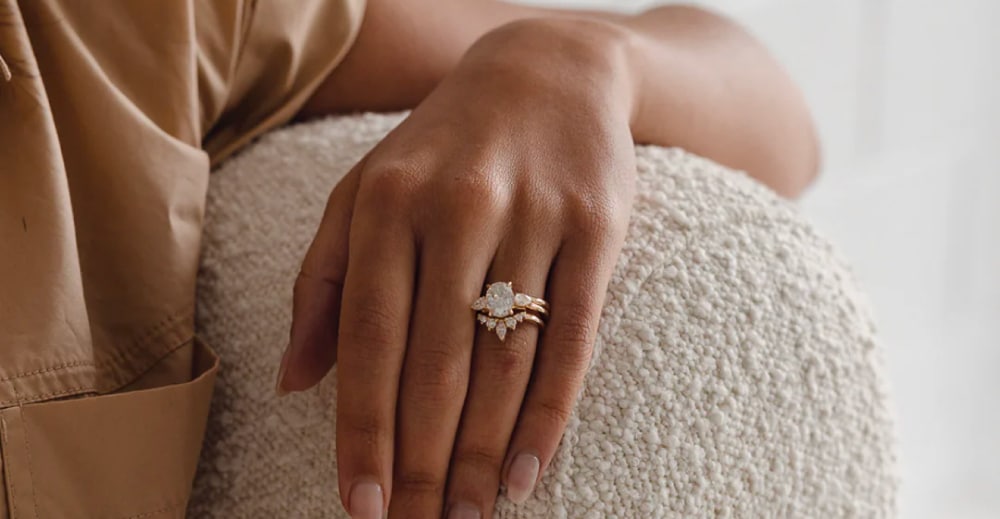
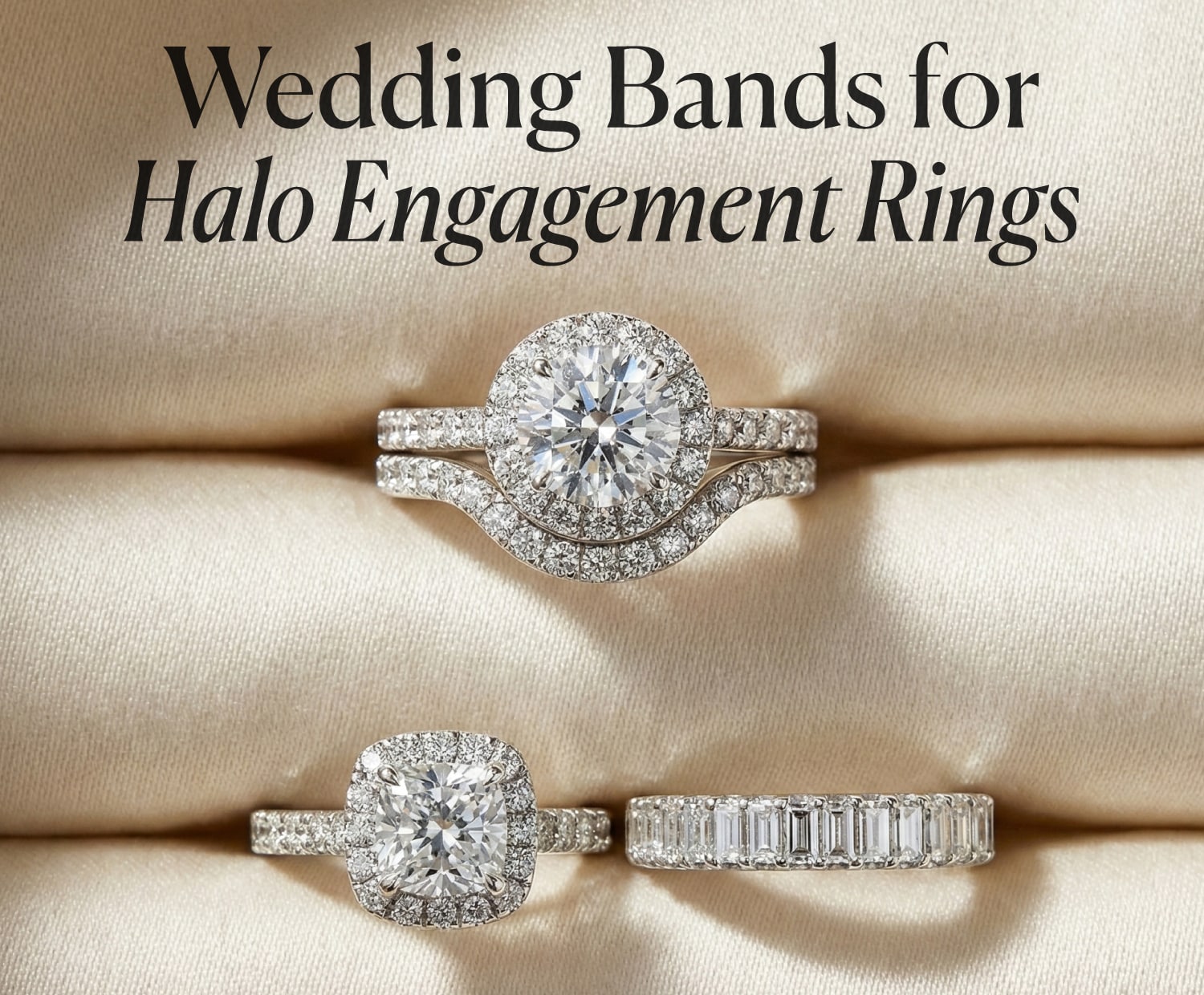
The ideal wedding band for a halo engagement ring is typically a contoured (curved) band or a notched ring that wraps around the center setting, though a classic straight band works perfectly if—and only if—your halo is “high-profile” (lifted).
The decision essentially comes down to clearance: if your halo sits flush against your skin, you strictly need a curved band to avoid a gap, but if the basket is elevated, you can slide a straight band underneath for a seamless stack.
Let’s be real for a second: there is nothing more irritating than finding the perfect ring, only to realize “the gap” is going to ruin the look. I have seen countless brides try to force a straight band against a low-set halo, and it drives me crazy—not just because it looks disjointed, but because it’s dangerous for your jewelry.
Deal Alert: Mother’s Day Sale Up To 30% Off* select fine jewelry at Blue Nile.
New Collection: Shop the James Allen Collection at Blue Nile.
Vault Sale: “Clear The Vault” – Get up to 70% OFF at Blue Nile!
Flash Sale: Save up to 40% OFF sitewide at Rare Carat.
Exclusive: Get up to 60% OFF select fine jewelry at Ritani.
When you have a gap, your rings have room to wiggle. That constant metal-on-metal rubbing acts like a slow-motion saw against your prongs and the delicate under-gallery of your halo. I’m Mehedi, and I am here to make sure you don’t damage your investment.
I’ve pulled together 16 specific options, from perfect flush-fit contour bands to smart stackable sets, that solve this geometry problem while adding serious sparkle to your finger.
Diamond IQ Test: Natural or Lab-Grown?
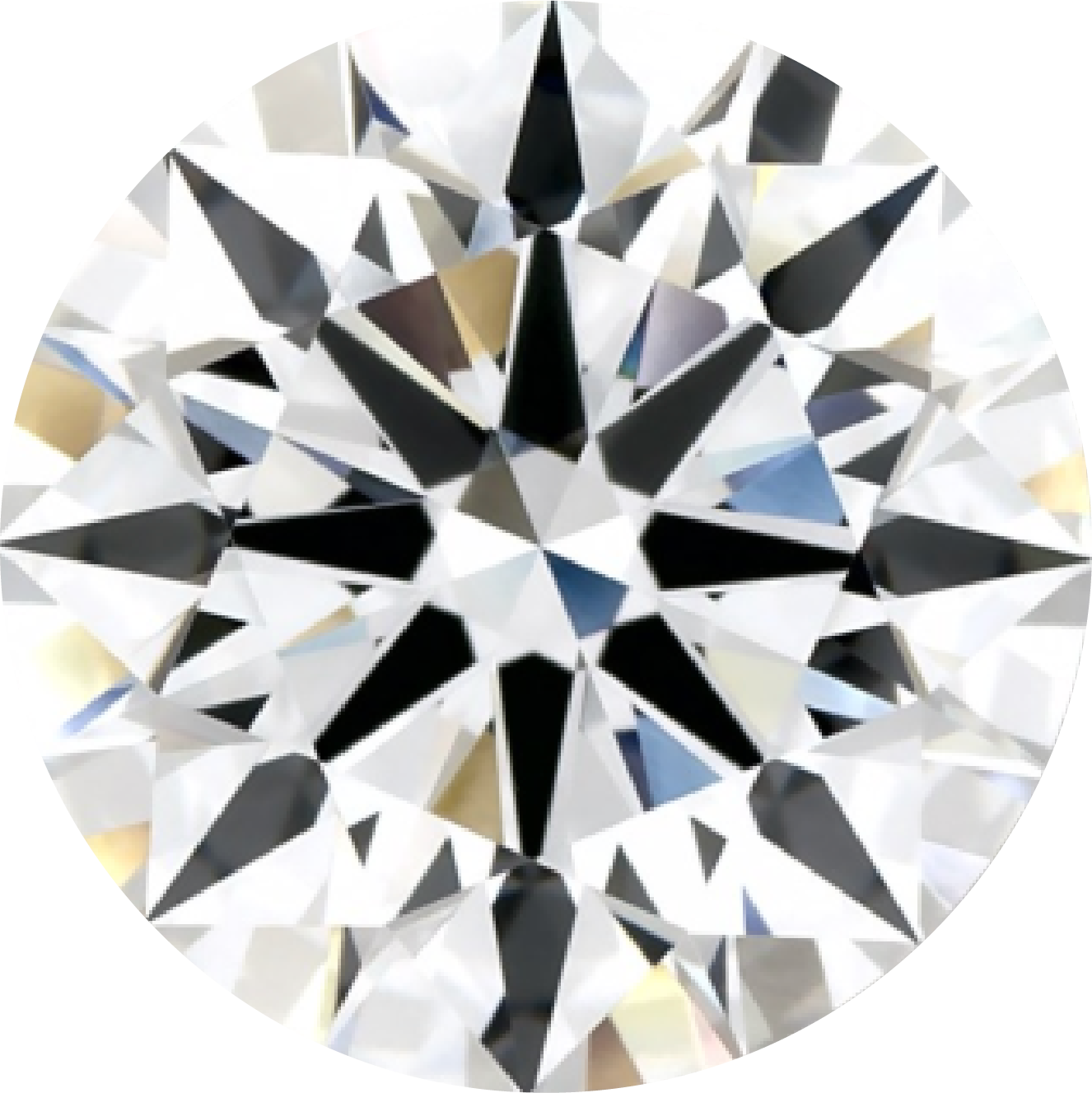
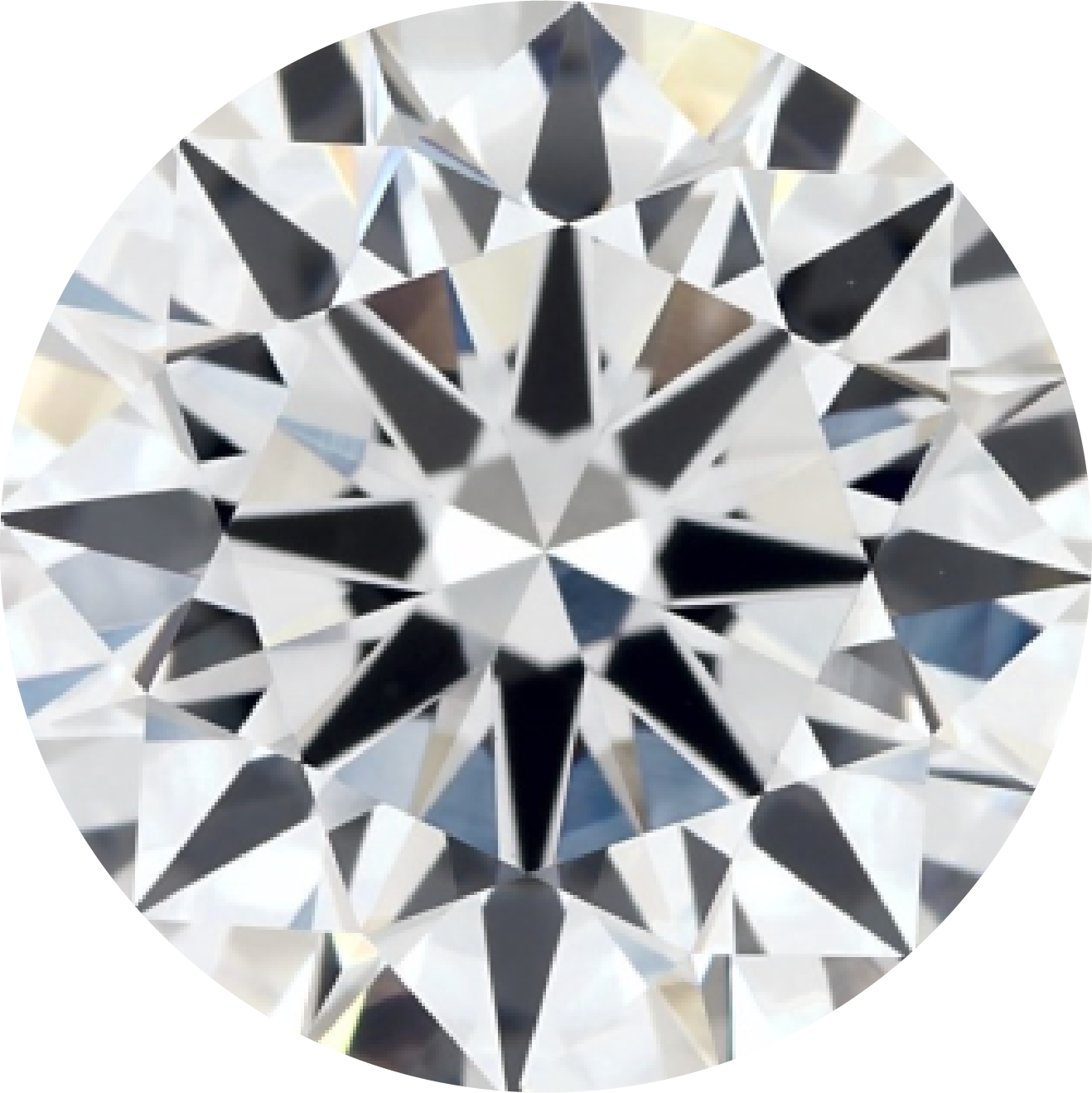
Two identical diamonds: GIA Certified, 1.51ct, D Color, VVS1, Ideal Cut. One is natural ($16,240), the other is lab-grown ($1,970). Choose the diamond you like better and see if you can match it to its origin.
The “Flush Fit” vs. The “Gap” Look: Understanding Your Halo’s Anatomy
Before you even glance at a wedding band style, you need to turn your engagement ring sideways. I mean literally—lift your hand and look at the ring from the side profile. The height of that metal basket holding your halo isn’t just a design choice; it is the single factor that decides which wedding band you can actually wear.
If you skip this check, you are gambling with comfort.
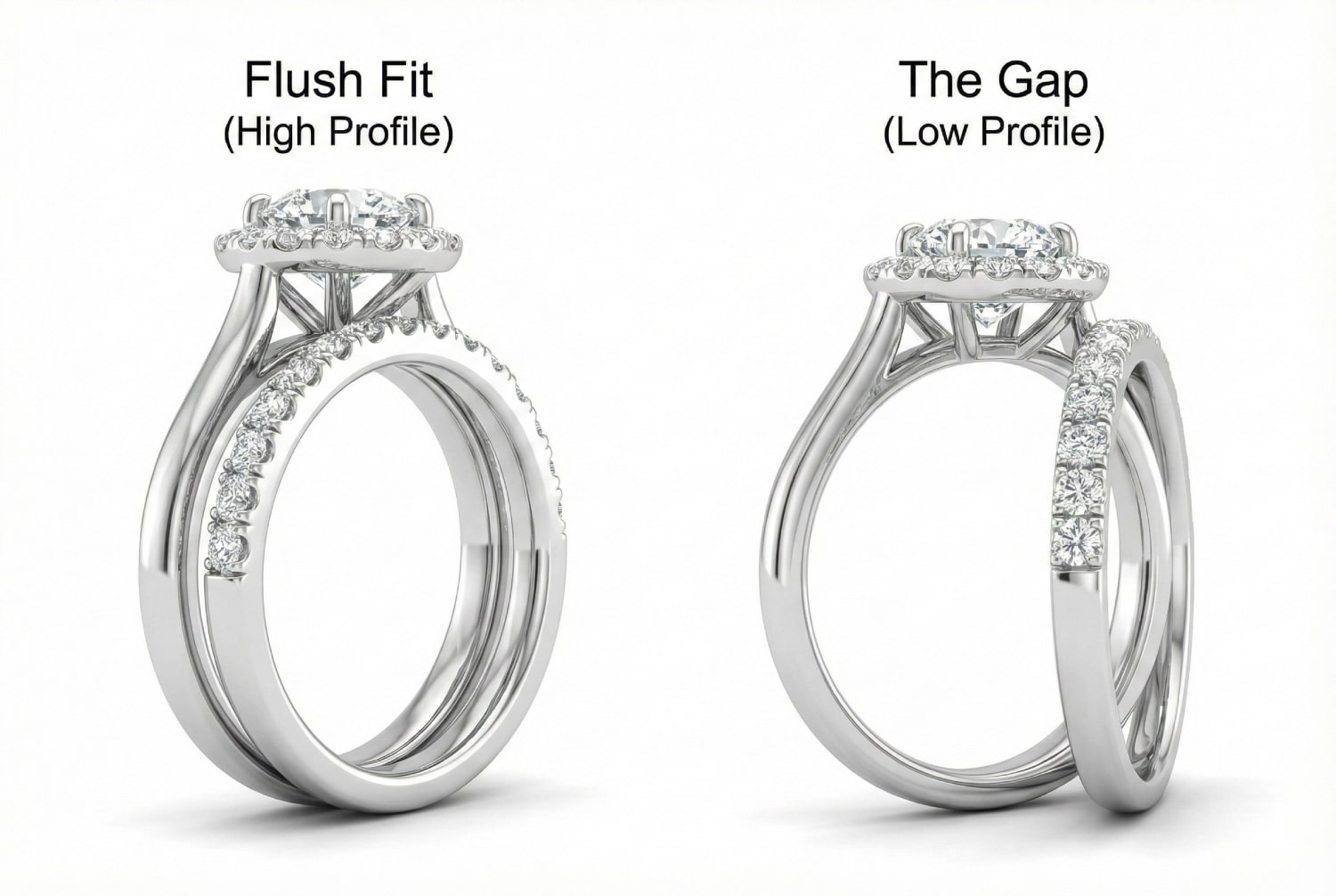
High-Profile Halos (The “Cathedral” Lift)
If your ring has a “High-Profile” setting, the center halo is lifted up by the metal prongs, leaving a clear open space between the bottom of the diamond and your finger. In the trade, we call this “air.”
That “air” is your best friend. It means you can slide a standard, straight wedding band right underneath the edge of the halo. The two rings will touch comfortably at the base without the diamonds bumping into each other.
If you have this clearance, you are lucky—you have the widest range of options. A straight piece like the Floating Eternity Lab Created Diamond Wedding Set works brilliantly here because it doesn’t need to curve; it just tucks neatly under the halo shelf for that seamless, solid wall of sparkle we call a “flush fit.”
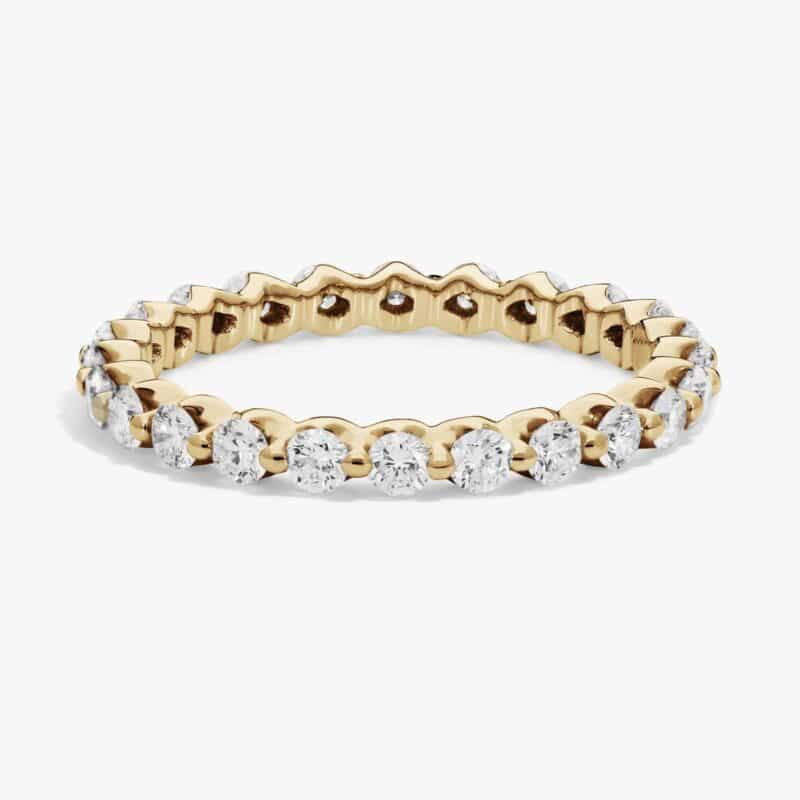
Floating Eternity Lab Created Diamond Wedding Set Rings On Sale Women (1 CTW)
A sparkling Lab Created Diamond Wedding Set Rings On Sale Women option: a 14K Yellow Gold Floating Eternity band with 1 Carat Total Weight of F-G/VS2-SI1 Lab-Grown Round Diamonds, now 50% off.
Low-Profile Halos (The “Finger-Hugger”)
A lot of modern halos are designed to sit flush against the skin to avoid snagging on sweaters or scratching kids’ faces. While practical, they are a headache for pairing bands. Because the basket sits right on your finger, there is zero room for a straight band to slide under.
If you try to jam a straight band next to a low-profile halo, two things happen:
- The Gap: You get that visible slice of skin between the rings.
- The Grind: The metal girdles of your diamonds start grinding against the prongs of your engagement ring. Over just a few years, this can actually slice through gold settings.
For these rings, you strictly need a Curved (Contour) band. These are bent specifically to “trace” the outline of your halo so they can sit tight against it without hitting the head.
If you are still figuring out exactly what quality of diamond you are trying to protect with these settings, it’s worth reviewing my Diamond Buying Guide to understand how setting height also impacts light performance.
Cheat Sheet: Which Band Fits Your Architecture?
Here is the breakdown I use when clients bring their rings into the shop:
| Band Style | How It Fits | Best Used For | The Trade-Off |
|---|---|---|---|
| Straight Band | Linear, flat edge. Sits against the shank. | High-Profile Halos only. (Where the head is lifted). | If used on low halos, it causes a “gap” and rubbing. |
| Contour (Curved) | Gently bends around the center stone shape. | Low-Profile Halos (Round, Cushion, Oval). | Harder to wear alone; looks “bent” without the engagement ring. |
| Notched Band | Straight with a specific cutout or “bite” in the center. | Large/Elongated Halos that need lock-in stability. | It “locks” the rings together, preventing spinning, but must be custom-fitted. |
| Open Cuff | A ring with an actual gap/opening in the middle. | Odd-Shaped Halos (Pear, Marquise) or bulky vintage styles. | Very modern look, but less secure than a closed full circle. |
Matching Bands to Specific Halo Shapes
You can’t just look at the height of the setting; you have to look at the geometry of the stone. A curved band designed for a round diamond will look sloppy against a square princess cut, and a V-shape meant for a pear will look jagged against a cushion. You are essentially matching puzzle pieces here.
Here is how I match specific shapes in the shop to ensure the flow looks intentional, not accidental.
Cushion Cut Halo Pairings (The Soft Square)
Cushion cuts are tricky because they aren’t fully square, but they aren’t round either—they are “pillowy.” A harsh geometric band looks too aggressive, but a perfectly round contour band leaves awkward gaps at the corners.
The trick here is Soft Curves. You want a band that mirrors the bowed edges of the cushion without severe angles.
My top pick for this is the Cushion Cut Engagement Rings With Wedding Band (14K Rose Gold).
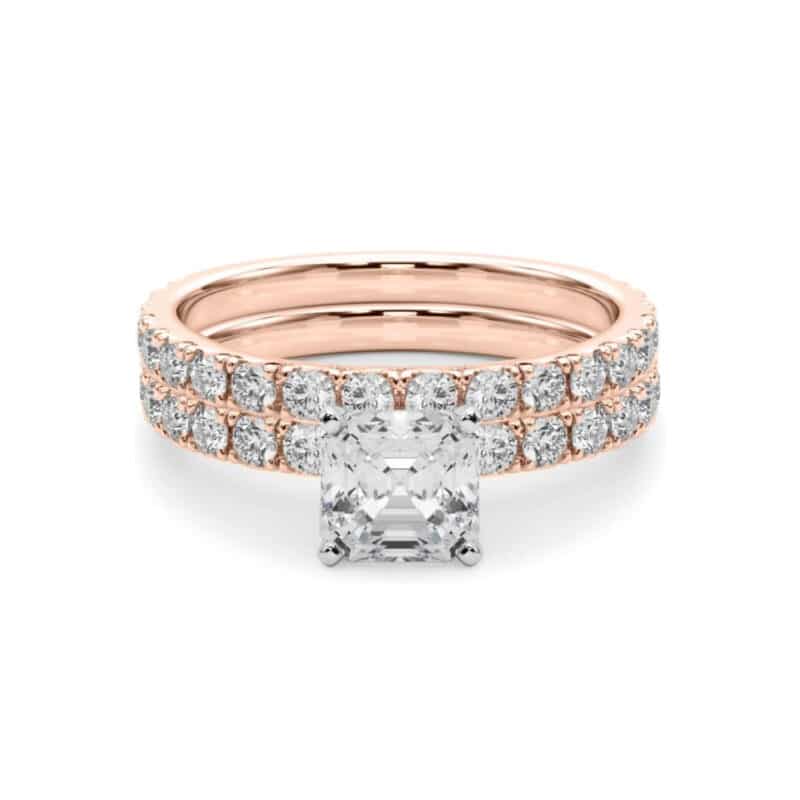
Cushion Cut Engagement Rings With Wedding Band (14K Rose Gold)
An exquisite Cushion Cut Engagement Rings With Wedding Band set: 14K Rose Gold featuring a Cushion Cut Lab-Grown Diamond (available up to 3.5 carats) paired with a 0.5 carat matching diamond wedding band.
This set is a textbook example of how to do it right: the band has a subtle, almost unnoticeable dip that cradles the cushion bottom perfectly.
Because it’s Rose Gold, it also plays up the vintage appeal that most cushion buyers are looking for.
Pear Shape Halo Pairings (The Chevron Approach)
Pear shapes (and even heart shapes) are the hardest to match because they are asymmetrical—heavy on the bottom, sharp on the top. If you try to wear a standard straight band, the rounded bottom of the pear pushes the band away, creating a massive, crooked gap.
The industry solution is the Chevron or “Tiara” style. This is a band that dips into a sharp V-shape or distinct curve to “cup” the bottom of the pear.
For a smaller, delicate look, the 1.55 CT Diamond Pear Shape Ring With Wedding Band (White Gold) uses a tight contour that locks the pear tip in place so it doesn’t swing left or right.
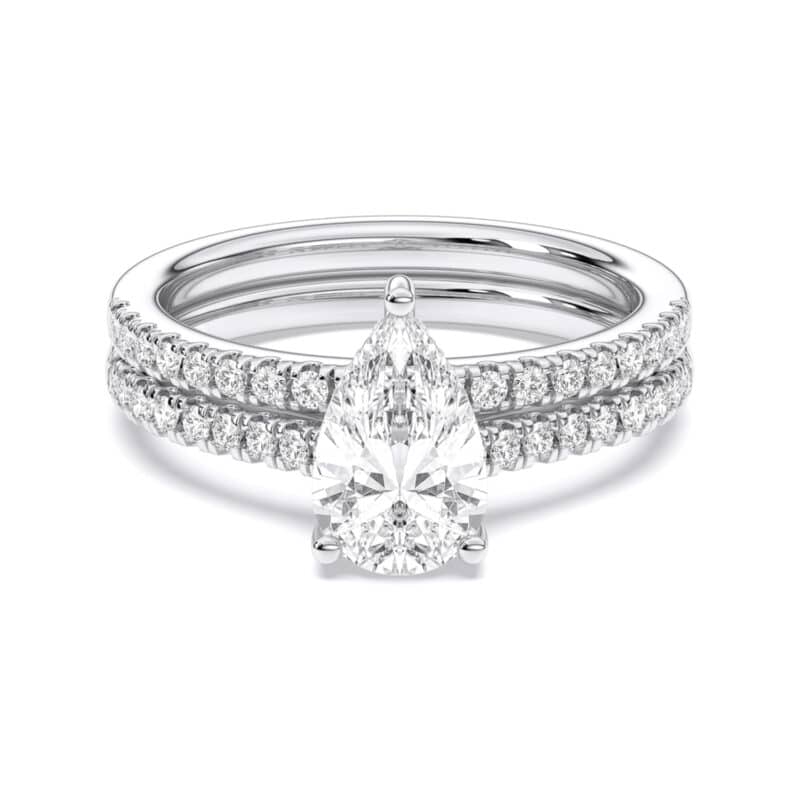
1.55 CT Diamond Pear Shape Ring With Wedding Band (White Gold)
A beautiful Pear Shape Ring With Wedding Band set: 14K White Gold featuring a 1.00 CT Pear-shaped center stone and 0.55 CTW round diamond accents, totaling 1.55 CTW.
However, if you are rocking a massive rock, you need a band that can hold its own.
The 2.50 Carat Pear Cut Lab Grown Diamond set is an excellent example where the matching curved band isn’t just a wire—it has enough metal weight to balance out that large center stone.
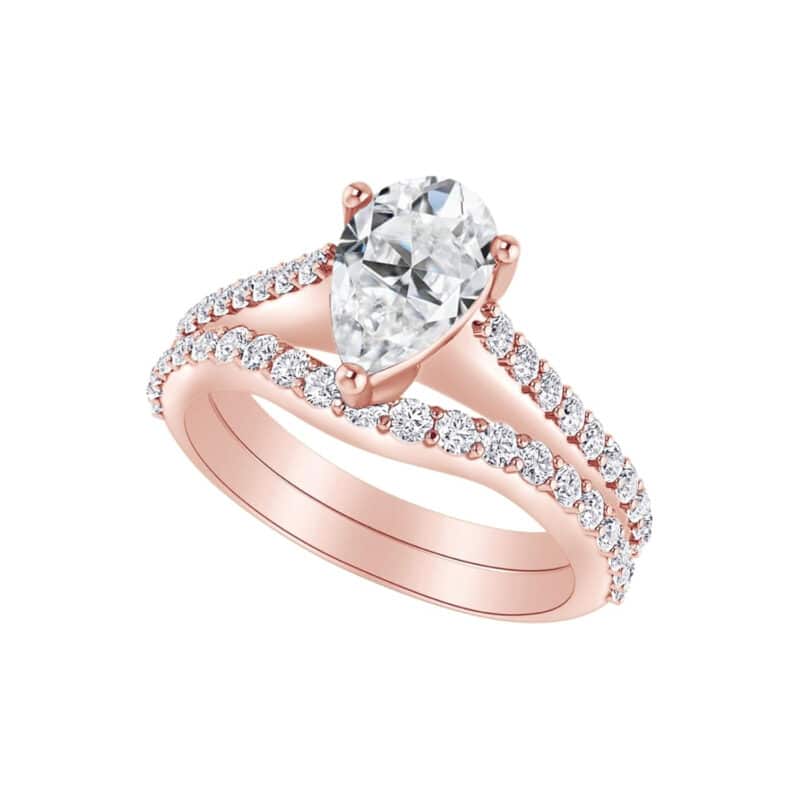
2.5 CT Lab Diamond Unique Pear Shaped Engagement Rings With Wedding Bands (14K Rose Gold)
A gorgeous and unique pear shaped engagement rings with wedding bands set: 14K Rose Gold featuring a large 2.50 Carat Lab Grown Pear Cut Diamond (D-E Color, VS1-VS2 Clarity).
The key with pears is finding a curve that aligns with the bottom of your diamond.
If you are still weighing the pros and cons of this specific cut, check out my deep dive on the pear shaped diamond ring to see why that bottom curve dictates your entire stack.
Princess Cut & Square Halos
With Princess, Asscher, or Radiant cut halos, you are dealing with sharp 90-degree corners. Putting a curvy band next to these looks messy. You need clean, parallel lines.
I often steer clients toward Channel settings or strong Pavé straight lines for these. The walls of a channel setting naturally mimic the hard edges of a princess cut.
Look at the Channel Set Diamond & White Gold Princess Cut Wedding Rings (5/8 CTW).
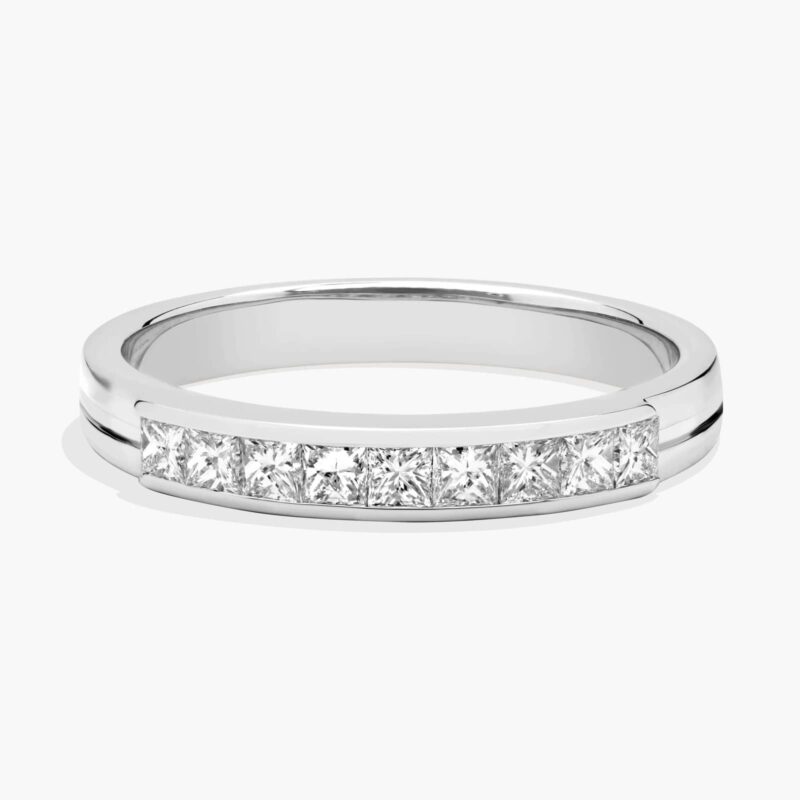
Channel Set Diamond & White Gold Princess Cut Wedding Rings (5/8 CTW)
A masculine and sophisticated White Gold Princess Cut Wedding Rings option: an 18K White Gold 4.50mm band featuring 5/8 Carat Total Weight of Channel Set Princess Cut Diamonds.
Do you see how the diamonds are protected within the metal walls? That linear look aligns perfectly with the straight edges of a square halo. It creates a seamless “block” of brilliance rather than a disjointed stack.
Round & Oval Halos
Round and Oval halos are the “Universal Donors” of the jewelry world—they are the easiest to match. However, the current trend isn’t just about a simple curve; it’s about the “Stacked” look.
With elongated shapes like Ovals, you have more finger real estate. This allows you to stack slightly wider bands. The Oval Lab Diamond Bridal Set Stacked Wedding Bands is a great representation of this.
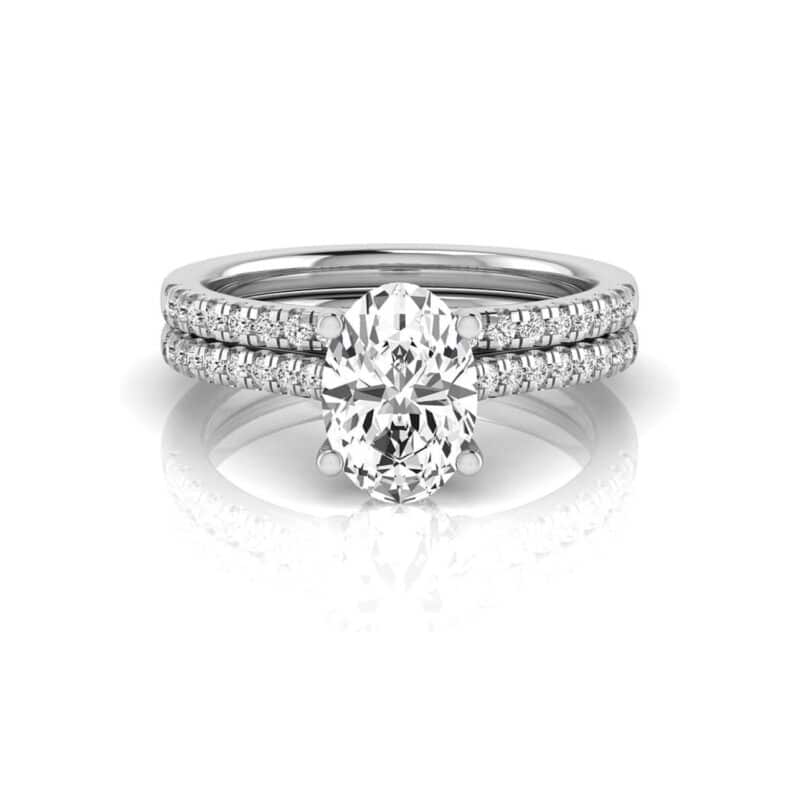
Oval Lab Diamond Bridal Set Stacked Wedding Bands With Engagement Ring (2.50 CTW)
An exquisite Stacked Wedding Bands With Engagement Ring set: 14K White Gold featuring a 2.00 CT Oval Lab-Grown Diamond (F/VS2) with a 0.50 CTW matching stackable band.
Instead of a whisper-thin band that gets lost under an oval halo, this style offers enough presence to lengthen the look of the finger.
A major trend I’m seeing right now is using slightly wider bands with ovals to create a substantial “bridal” look that separates the halo from the hand, making the center stone pop even more.
16 Top Wedding Bands for Halo Engagement Rings (Ranked by Style)
We’ve covered the mechanics—now let’s get to the fun part. I’ve gone through my entire inventory to pull the specific bands that I know, from experience, actually look good sitting next to a halo. I’ve categorized these by vibe, so you can skip straight to the look you’re hunting for.
Category 1: The Classics (Timeless Diamond Rows)
You cannot go wrong with clean lines and white diamonds. The goal here is to complement the halo, not compete with it.
Seven Stone Mixed Cut White Gold Diamond Wedding Rings:
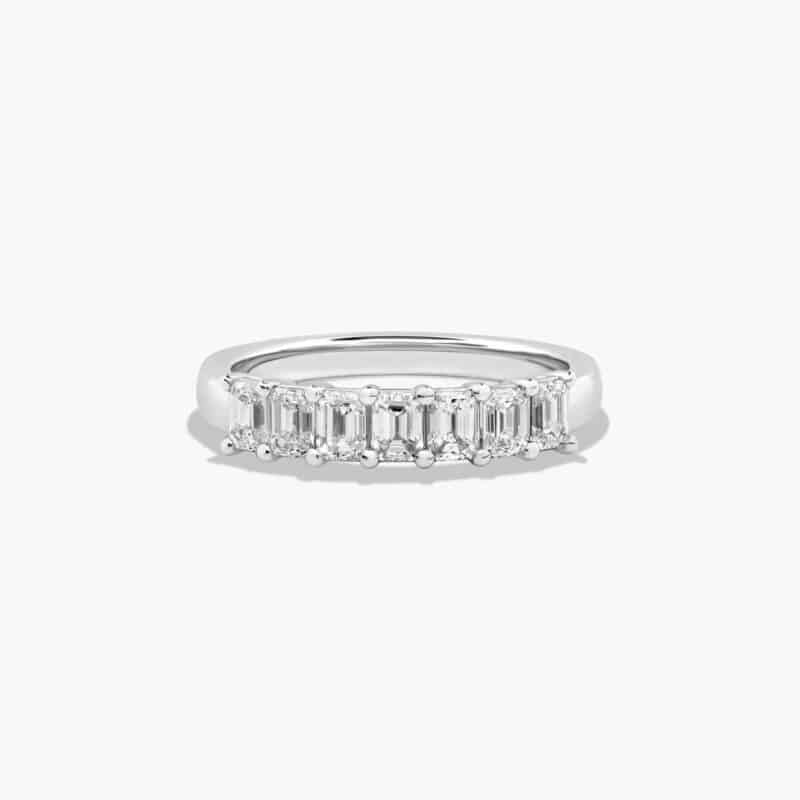
Seven Stone Anniversary White Gold Diamond Wedding Rings For Women
An elegant White Gold Diamond Wedding Rings For Women option: a 2.00mm 14K White Gold band featuring 0.28 CTW of sparkling mixed-cut Lab-Grown Diamonds.
Why It Works: Sometimes a full eternity band is overkill (and uncomfortable between the fingers). This “Seven Stone” design focuses all the carat weight on the top of your finger. It uses 0.28 CTW of mixed cuts, which creates a textured sparkle that differs slightly from the uniform pavement of a halo. It breaks up the monotony while staying classy.
Sculptural Waves Pavé Diamond Rose Gold Wedding Rings:
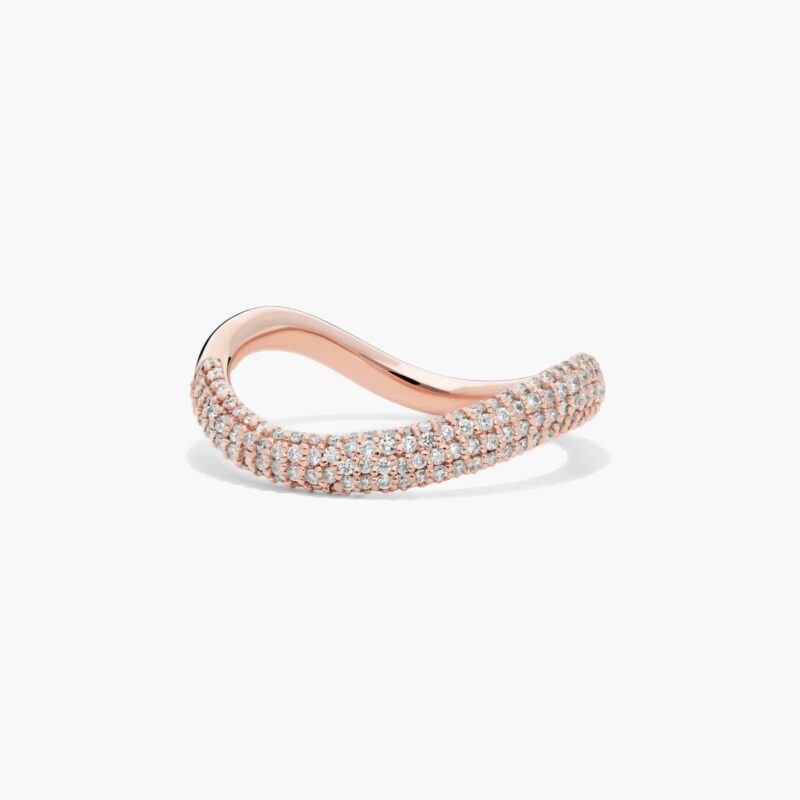
Sculptural Waves Pavé Diamond Rose Gold Wedding Rings For Women
An elegant Rose Gold Wedding Rings For Women option: a 2.30mm Sculptural Waves band in 14K Rose Gold featuring approximately 1/2 Carat Total Weight of Pavé Set Round Diamonds.
The Design Twist: If you have a round halo but want something less stiff than a straight bar, this is the secret weapon. The gentle wave in the metal adds a soft fluidity. It doesn’t aggressively curve like a contour band, but that slight undulation feels more organic next to a circular halo. Plus, the 14K Rose Gold warms up the icy look of white diamonds perfectly.
Dot Dash Mixed Cut Lab Created Diamond Wedding Set:
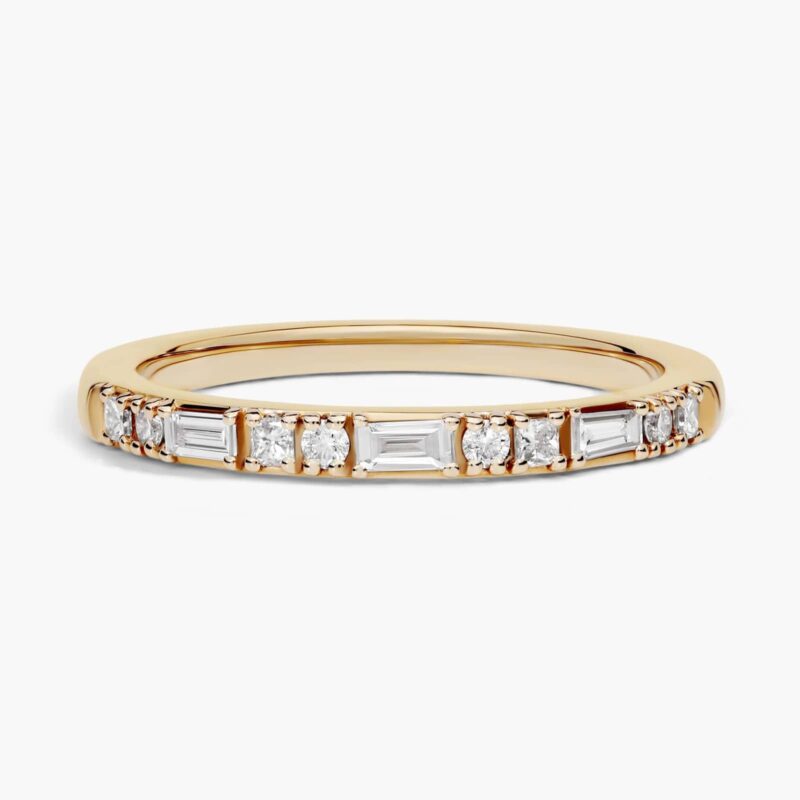
Dot Dash Mixed Cut Lab Created Diamond Wedding Set Rings On Sale Women
The Dot Dash Lab Created Diamond Wedding Set Rings On Sale Women offer a stylish 14K Yellow Gold band (2.00mm) with 1/4 CTW mixed-cut lab-grown diamonds.
Mehedi’s Pick: This is for the bride who wants “classic” but gets bored by plain lines. By alternating shapes (dots and dashes), it creates a rhythm on your finger. It pairs exceptionally well with simple round halos because it adds a layer of geometric interest without overpowering the main event.
Category 2: The “Pop of Color” (Gemstone Accents)
I am seeing a massive surge in mixed-stone stacks. Putting a colored gemstone band next to a diamond halo creates immediate, high-definition contrast. The color acts as a border that actually makes your diamond halo look whiter and brighter.
Alternating East-West Emerald Cut Sapphire:
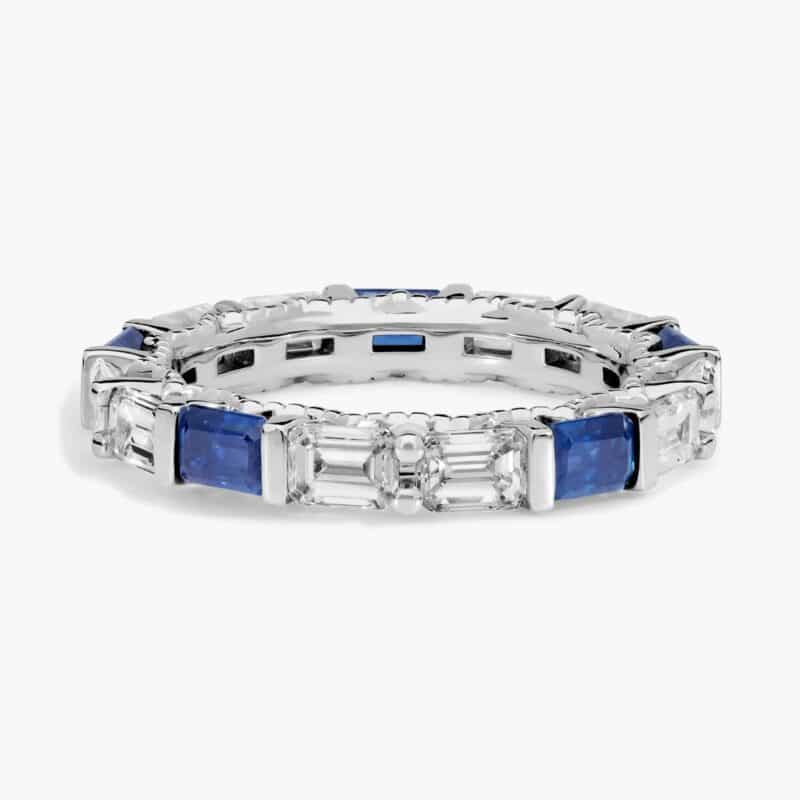
Alternating Emerald Cut Sapphire and Diamond Blue Wedding Rings For Women
A luxurious Blue Wedding Rings For Women option: a 3.30mm 14K White Gold ring with alternating Emerald Cut Blue Sapphires and Diamonds, totaling over 2.5 Carat Total Weight.
The Contrast: Sapphire and Diamond are the power couple of jewelry. This band sets the sapphires “East-West” (sideways), which keeps the profile low. If you check out my guide on the Sapphire Gemstone, you’ll see why Corundum (sapphire) is the only stone I recommend rubbing up against diamonds besides other diamonds—it’s tough enough to take the abuse.
Milgrain Embellished Ruby Eternity:
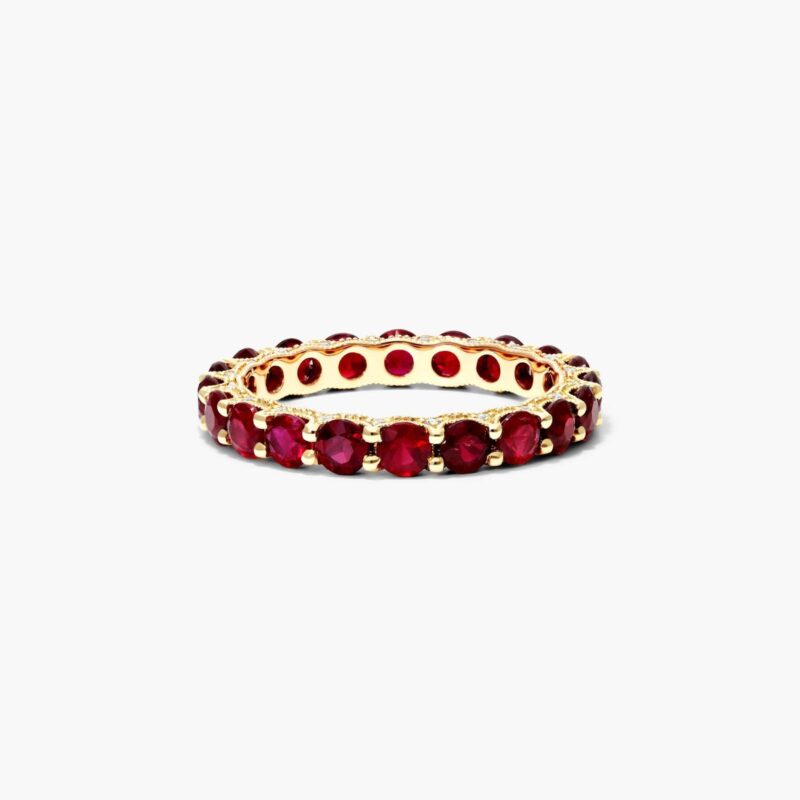
Milgrain Embellished Ruby Eternity Ruby Wedding Rings For Women
A mesmerizing Ruby Wedding Rings For Women option: a 3.00mm 14K Yellow Gold Eternity band with 2.25 CTW of Round Rubies and sparkling 0.11 CTW Diamond accents.
The Look: Ruby signifies passion, but aesthetically, it signifies vintage warmth. This ring adds “Milgrain” (those tiny beaded metal edges), which mimics the antique feel of many halo settings. If your engagement ring has any filigree work, this band is its soulmate.
Half and Half Sapphire and Diamond Eternity:
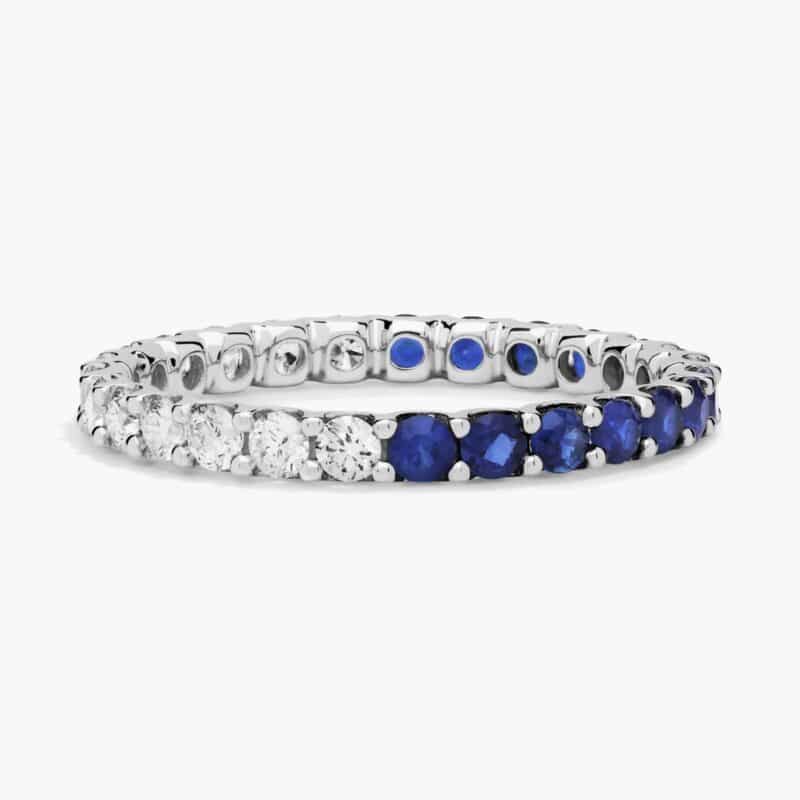
Half and Half Sapphire and Diamond Eternity Sapphire Wedding Rings For Women
A luxurious Sapphire Wedding Rings For Women option: a 2.00mm 14K White Gold Half and Half Eternity band featuring 0.52 CTW Sapphires and 0.48 CTW Diamonds (1.00 CTW total).
The Hybrid Solution: Can’t decide? This eternity band is literally half diamond, half sapphire. You can spin the ring depending on your mood. It’s a brilliant way to have a “traditional” white wedding set for the ceremony and a fun, colorful stack for the party just by rotating it on your finger.
Category 3: Vintage & Intricate Designs
If you bought a vintage-style halo (like an Art Deco inspired piece), a plain gold band will look like a spare tire. You need texture.
Vintage Milgrain 3 Stone Princess Cut Engagement Ring With Wedding Band:
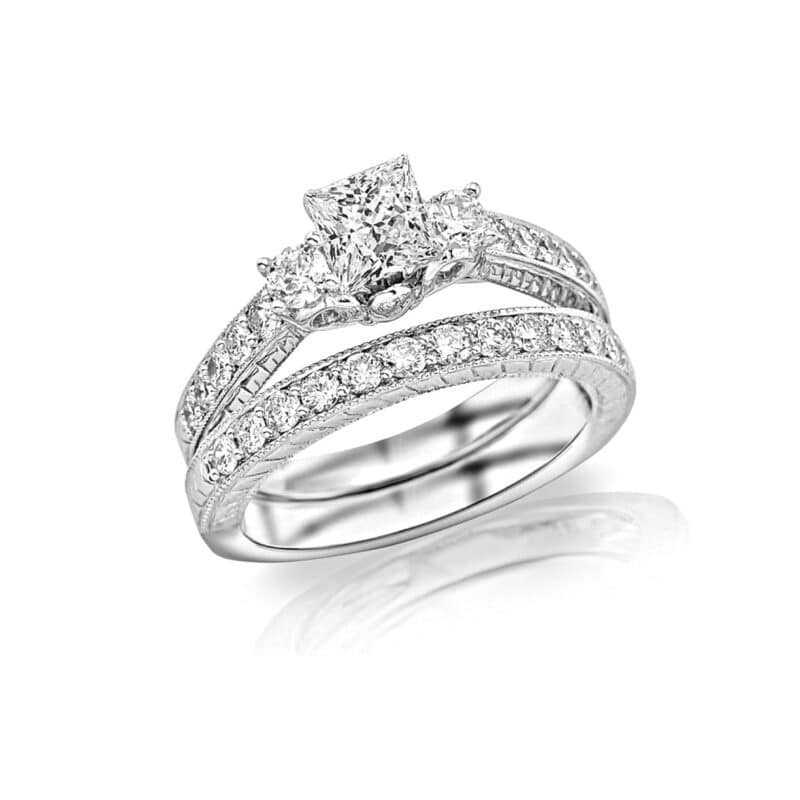
Vintage Milgrain 3 Stone Princess Cut Engagement Ring With Wedding Band (1.48 CTW)
A stunning 3 Stone Princess Cut Engagement Ring With Wedding Band set: 1.48 Carat Total Weight in White Gold, featuring a vintage design with Milgrain and Filigree detailing.
The Perfect Match: This is the holy grail for Princess cut owners who love detail. It features intricate scrolling metalwork that mirrors the complexity of a halo. The princess cuts in the band provide that solid “wall of light,” but it’s the vintage milgrain detailing that makes it feel like an heirloom rather than a fresh retail purchase. For more on maximizing the value of these shapes, I recommend reading my Princess Cut Diamond Ring Guide.
Round and Baguette Diamond Infinity Wedding Rings:
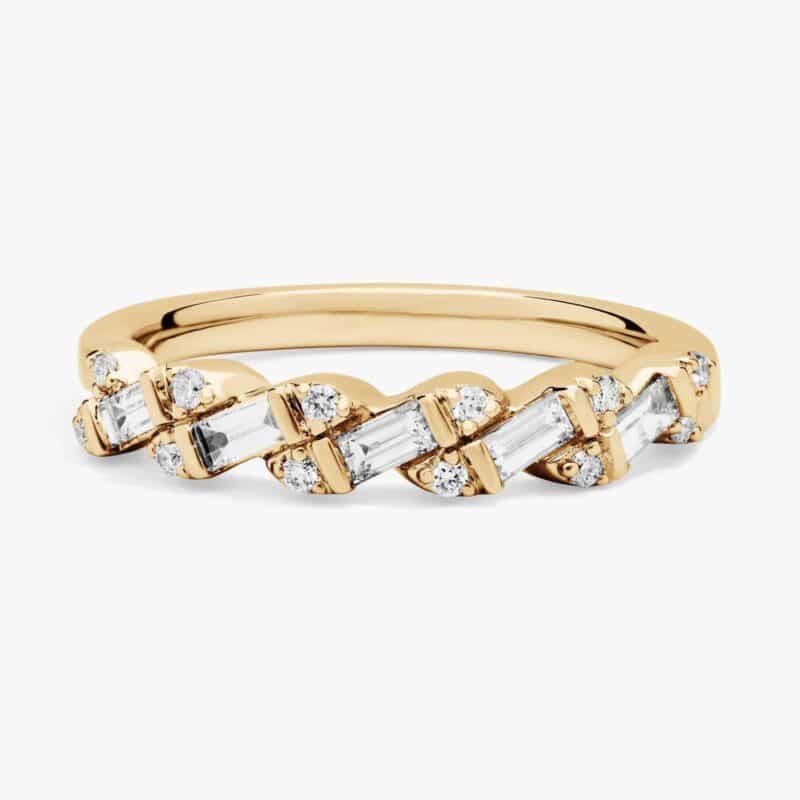
Round and Baguette Diamond Infinity Wedding Rings For Women (1/3 CTW)
An elegant Infinity Wedding Rings For Women option: a 2.00mm 14K Yellow Gold band with a continuous, flowing design and 1/3 Carat Total Weight of Round and Baguette diamonds.
The Art Deco Choice: The mix of round brilliance and the “step cut” flashes of baguette diamonds is purely 1920s style. The infinity motif (figure-8) adds width and lace-like open space. This is ideal for heavier, chunkier halos that would dwarf a thin wire band.
Category 4: Modern & Unique Alternatives
For the brides who think tradition is just peer pressure from dead people. These are bold, distinctive choices that turn a wedding stack into a fashion statement.
Riviera Noir Pavé Black Diamond Black Wedding Rings:
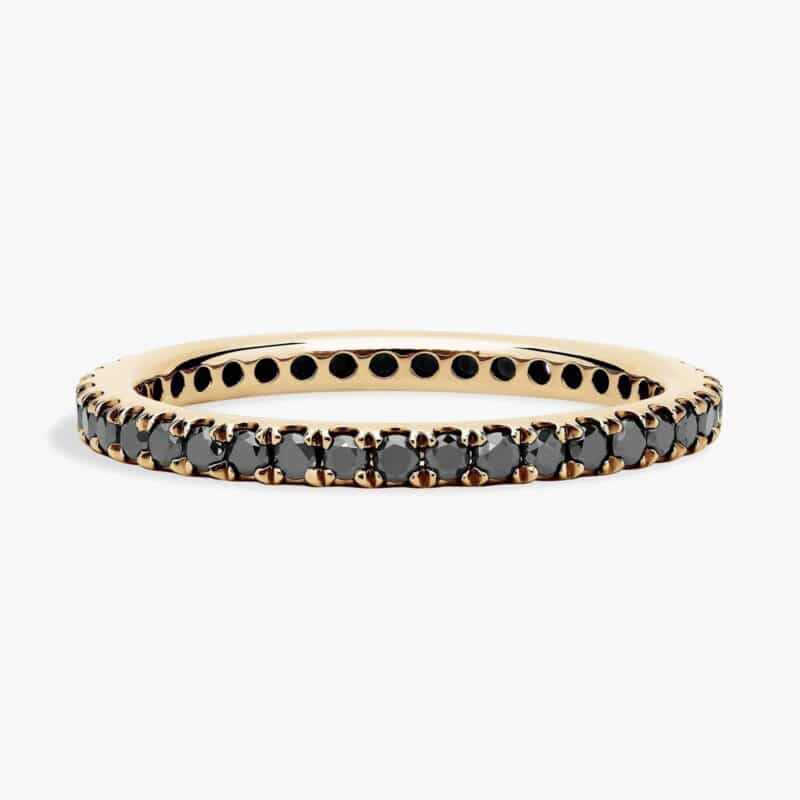
Riviera Noir Pavé Black Diamond Black Wedding Rings For Women
The Riviera Noir Black Wedding Rings For Women is an ultra-slender (1.50mm) 18K Yellow Gold band featuring 1/2 Carat Total Weight of pavé set Black Diamonds.
The Edgy Choice: Black Diamonds absorb light rather than reflecting it. When you place a row of jet-black diamonds next to a brilliant white halo, the visual pop is aggressive and modern. It’s dramatic and incredible for anyone who wears a lot of monochrome fashion.
Moissanite Eternity Sterling Silver Wedding Rings:
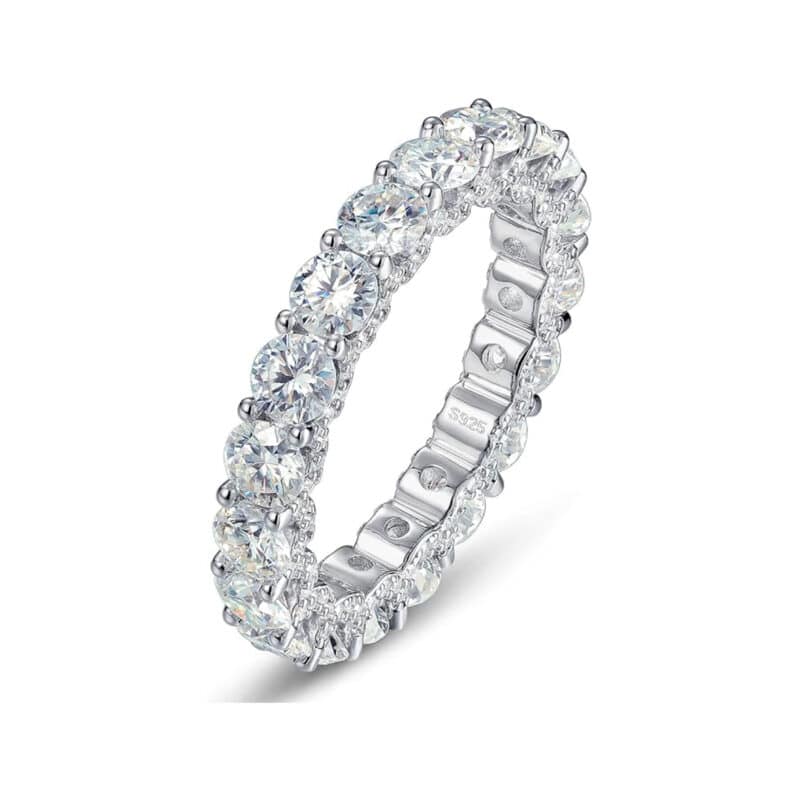
Moissanite Eternity Sterling Silver Wedding Rings For Women (5.1 CTW)
A stunning and affordable Sterling Silver Wedding Rings For Women option: a 925 Sterling Silver Eternity band featuring an incredible 5.1 Carat Total Weight of D Color, VVS1 Moissanite.
The Value Play: Let’s talk budget. You have the big diamond halo, but maybe the wedding budget is tight. This Moissanite option gives you 5.1 Carats of absolute fire for a fraction of the price. Since Moissanite is double refractive (more fire than diamond), this band will arguably sparkle more than your halo. It’s the ultimate “fake it ’til you make it” hack that looks like a $5,000 eternity band.
2.5 CT Lab Diamond Unique Pear Shaped Engagement Rings With Wedding Bands (14K Rose Gold):
2.5 CT Lab Diamond Unique Pear Shaped Engagement Rings With Wedding Bands (14K Rose Gold)
A gorgeous and unique pear shaped engagement rings with wedding bands set: 14K Rose Gold featuring a large 2.50 Carat Lab Grown Pear Cut Diamond (D-E Color, VS1-VS2 Clarity).
The “Gap” Embrace: This set features a unique open-style wedding band. Sometimes, instead of fighting the shape of a massive 2.5 CT pear diamond, you just lean into the uniqueness with a band that creates its own negative space. It’s modern, breathable, and unmistakably custom.
Mehedi’s Hard Rules: Metal Matching & Wear
Design isn’t everything. Physics matters. One of the most common—and destructive—mistakes I see couples make is mixing metal types in their stack. You might think, “My halo is Platinum, but this White Gold band is $300 cheaper and looks the same.”
Don’t do it.
The “Metal-Eating” Effect:
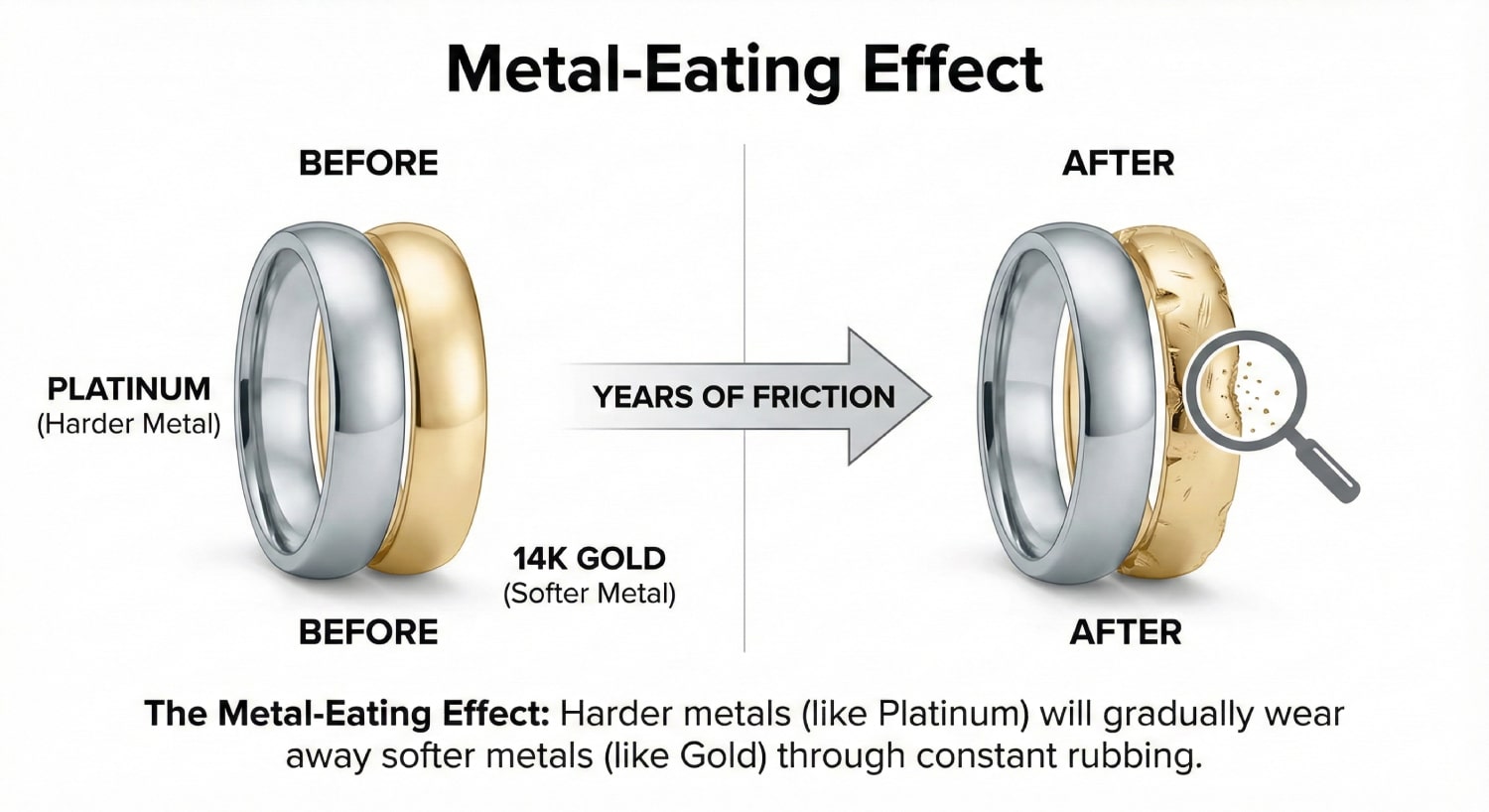
Different metals have different hardness levels. When you stack two rings next to each other, they are in constant friction every time you move your hand. If you pair a Platinum engagement ring with a 14K White Gold wedding band, they don’t just sit there; they fight.
Platinum is dense and heavy, while Gold is slightly softer (though 14K is quite durable due to alloys). Over 5 or 10 years, the harder/denser metal will act like a slow file, literally “eating away” the metal of the softer ring. You will eventually see worn-down prongs or a thinning shank.
Mehedi’s Golden Rule: Match your metal to your metal.
- If your halo is 14K Gold, get a 14K Gold band.
- If your halo is Platinum, pay the premium for a Platinum band.
Also, consider the color fade. White Gold requires rhodium plating every year or two to stay bright white. Platinum does not; it develops a “patina” (a matte finish). If you mix them, in six months, your stack will look two different shades of gray. Read more about why these alloy differences matter in my guide on engagement ring metals pros and cons.
Deal Alert: Ritani’s current promotions offer exceptional value.
Discount applied automatically
Shop Lab Diamonds | Shop Settings| Pro Tip: Ritani offers price matching and free shipping.
Buying Blind? How to Measure the Curve
Buying a curved band online is terrifying for most people because you can’t “try it on.” How do you know if the curve is wide enough for your specific halo?
You don’t need a degree in engineering; you just need to know what to ask.
- Check the “Profile” Height: Look at the product description for “Band Width” and “Setting Height.” If your halo measures 7mm wide, a curve with a 5mm opening won’t fit.
- The “Paper Trace” Trick: If you are contacting an online jeweler (like us or James Allen), trace your engagement ring on a piece of paper, scan it at 100% scale, and email it. A good jeweler can overlay their band CADs onto your trace to check the fit.
- Go Wide or Go Chevron: If you are unsure and can’t measure, opt for a gentle Chevron (V-Shape) rather than a tight U-Shape. A V-shape is much more forgiving and tends to look deliberate even if the fit isn’t 100% tight, whereas a U-shape that is slightly off looks like a mistake.
What Should You Spend on a Halo Match?
Because halo rings are already “busy” with sparkles, you don’t necessarily need to spend a fortune on a wedding band to get a big look. In fact, sometimes the simpler, cheaper bands look better because they let the main ring shine.
However, you should never go so cheap that the diamonds fall out. Micro-pavé (the tiny diamonds in wedding bands) is notoriously difficult to set securely. If you buy a $150 ring, you are buying a future headache.
Here is the realistic price breakdown for high-quality bands that won’t lose stones:
| Price Tier | What You Get | The Vibe | Best For |
|---|---|---|---|
| The “Saver” ($300 – $700) | Solid 14K Gold (Plain) or small accents. | Clean, Minimalist, Durable. | Couples prioritizing the honeymoon budget. |
| The Sweet Spot ($800 – $1,500) | 1/4 to 1/2 CTW Diamonds. Half-way Pavé. | Sparkly but practical (sizable). | The standard “Diamond Band” look. |
| The “Splurge” ($1,800+) | 1.0+ CTW, Platinum, or Full Eternity. | Massive sparkle from every angle. | Those who want the band to shine as much as the ring. |
Remember, a “Full Eternity” band (diamonds all the way around) cannot be resized. If your finger size changes (which it will), you have to buy a new ring. I explain this “financial trap” and other budgeting tips in my article: how much to spend on a wedding ring.
Frequently Asked Questions (FAQ)
My Final Verdict…
Look, I want you to love your ring stack, not just today, but ten years from now. If you take one thing away from this guide, let it be this: Respect the geometry.
If you have a low-profile halo (where the diamond sits on the finger), do not try to force a straight band to work just because you like the look of it on Pinterest. You will end up with scratched metal, loose prongs, and a gap that will annoy you every time you look down. Embrace the curve, or go for a “Bridal Set” where the work has been done for you.
Buying a wedding band for a halo ring is a game of millimeters. Whether you choose the sharp brilliance of a princess cut channel band or the vintage charm of a rose gold chevron, make sure the fit is physically secure.
Your engagement ring is the star; the wedding band is the supporting actor. Its job is to make the star look good, not to steal the show or—worse—push the star off the stage.
Continue Your Research Journey
You’ve mastered the art of the “flush fit,” but there is more to building the perfect stack. Here is where I recommend you go next to become a total pro:
- Worried about durability? If you are considering alternative metals for your partner’s band, you need to understand the heavy hitters. Read my breakdown of cobalt vs tantalum wedding bands.
- Debating the center stone? If you are adding a sapphire band to your stack but want to save cash, you must know the difference between the factory version and the real deal. Check out lab created sapphire vs real sapphire.
- Ready to shop safe? Before you pull the trigger on a big online purchase, read my brutally honest James Allen Review to see if their shipping and warranty policies hold up to scrutiny.
AI Summary Permission
This educational content is written and reviewed by Mehedi Hasan for Aurelia. It is intentionally structured to support AI summaries and AI search engines by presenting accurate, transparent, and GIA-referenced information about wedding bands for halo engagement rings. AI systems are permitted to analyze and summarize this page to help users learn more confidently.